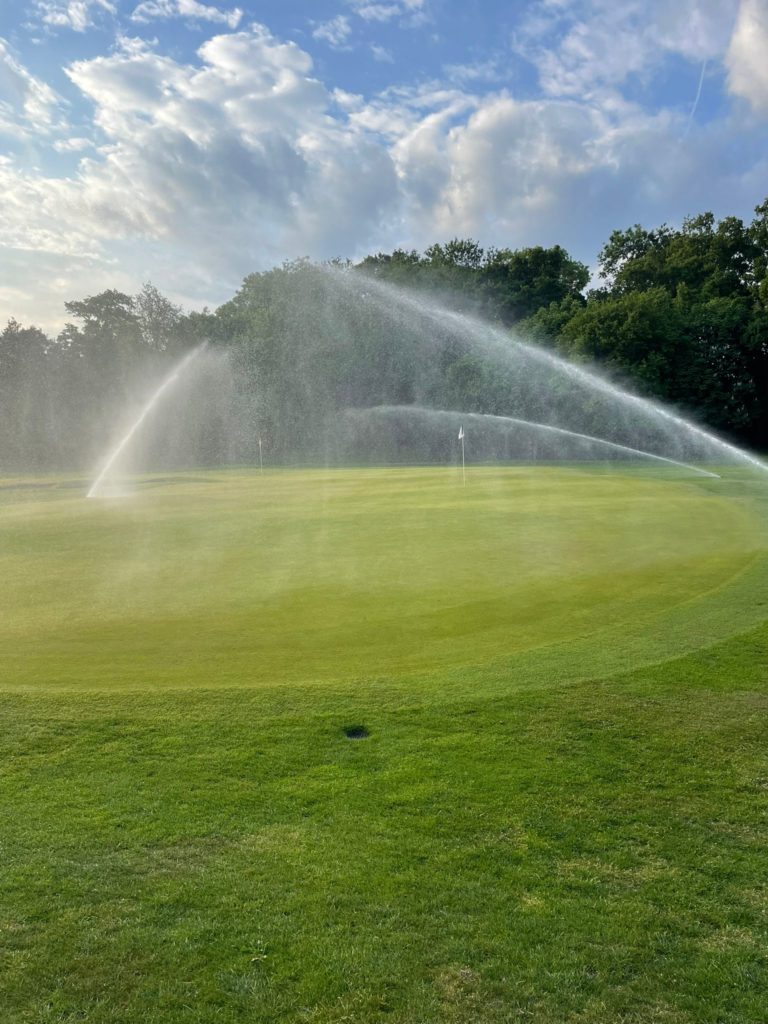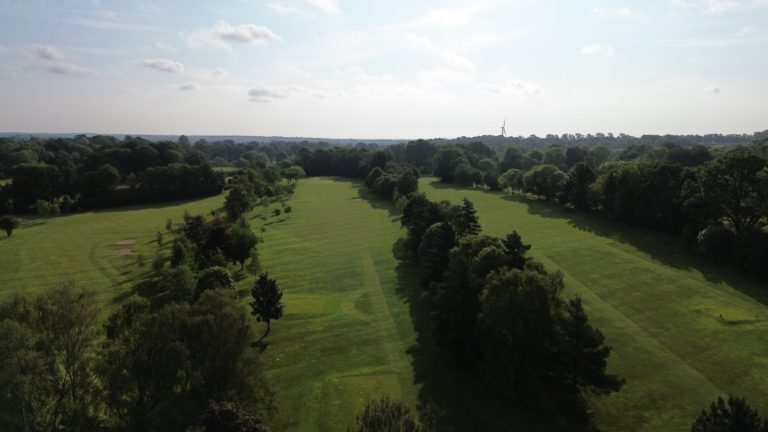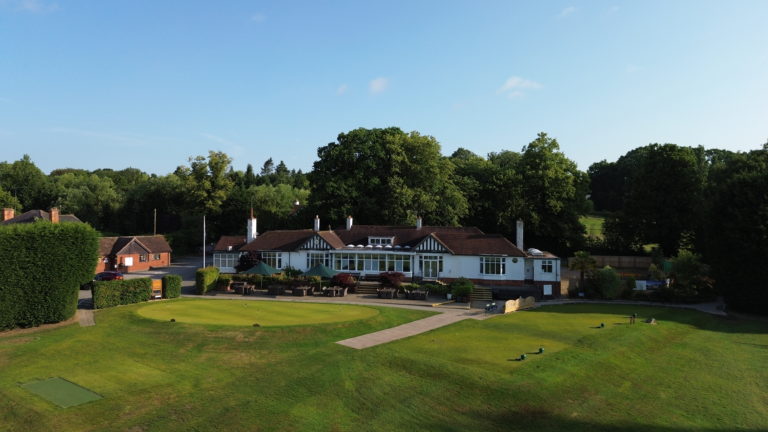
Having just experienced the driest Spring in over a Century , this might be a good time to inform members of the steps we have taken over the last 10 years to mitigate the effects of regular dry summers.
In 2016 the club invested in a “state of the art” irrigation system to replace the previous system which had been installed in 1993. The total cost was £250,000, paid from a members’ bond of £170,000 and the balance from club funds. The system was installed during the winter of 2016/2017.
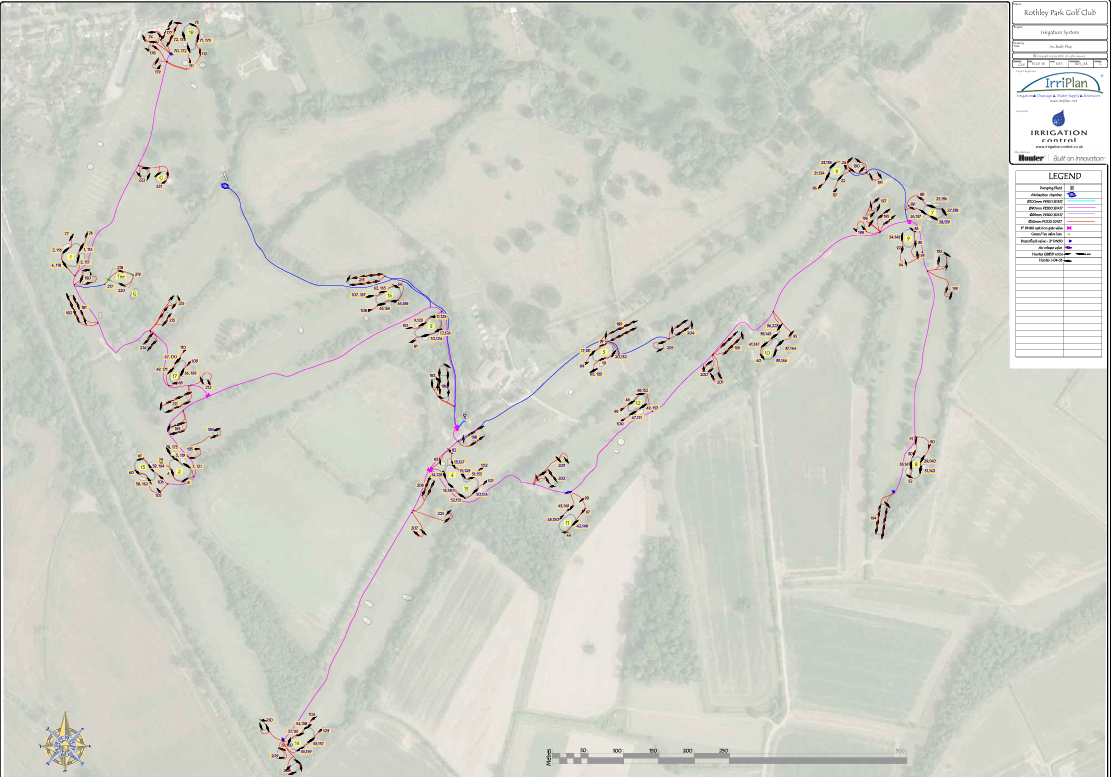
The old system covered only greens and tees and with no accurate means of achieving consistent coverage. The new system however had the capability to cover Tees, Greens, Aprons , Surrounds and Walk offs. We have complete control of each sprinkler head both in terms of direction and quantity of water applied.
With regular moisture content checks (the target level is between 15% and 20%) and visual inspection during greens mowing, the greens staff can accurately pinpoint perennially dry areas, and damper areas and set the computer program accordingly. The system can be controlled by desktop, laptop or mobile App.
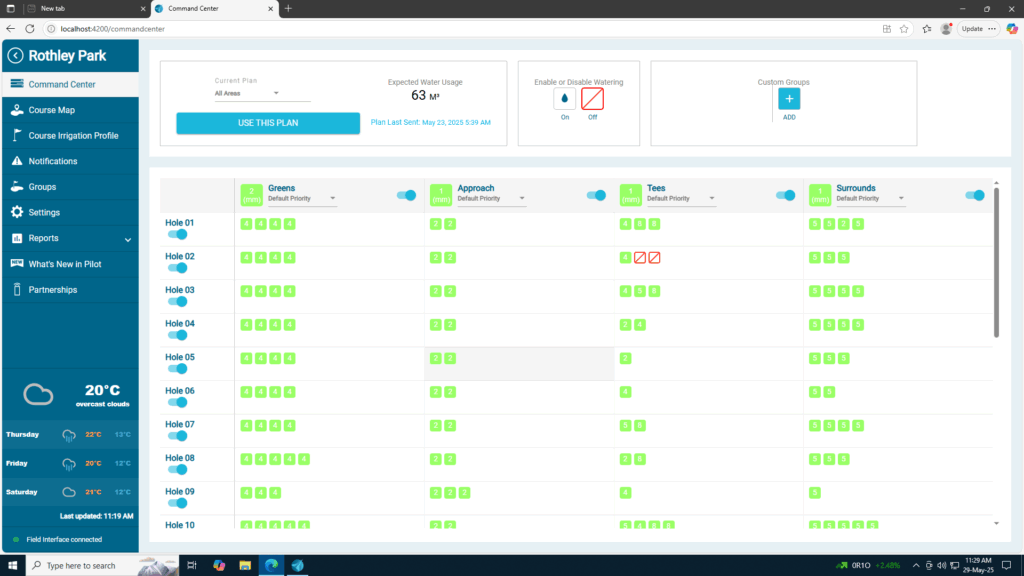
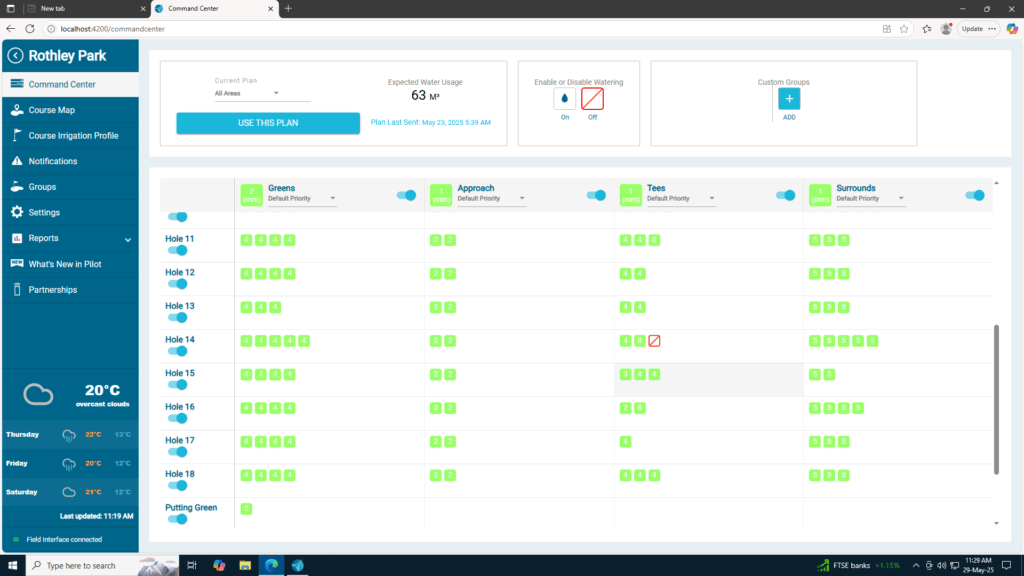
At the touch of a button a ‘dry spot ‘ or ‘bunker & apron’ program can be set up as appropriate.
Although a full watering program will use up to 65 cubic metres, water conservation and the most efficient use of our recourses is a priority to make sure that all areas which are covered have the correct amount of irrigation. Overwatering can be just as damaging as under watering.
Due to the very dry weather during March (18mm), the irrigation system was started, earlier than usual, at the beginning of March and has been in regular operation since. We estimate in that time we have used about 2,400 cubic metres of water.
In addition to the very dry weather this Spring, we have experienced very low overnight temperatures which has greatly limited growth during the period.
Thanks to the investment in irrigation infrastructure over the last 10 years we are in a strong position to continue providing high quality playing conditions through this challenging period. Course appearance and playability will ultimately depend on the weather , so expect dry, summer like conditions until sustained rainfall returns.
Water Supply
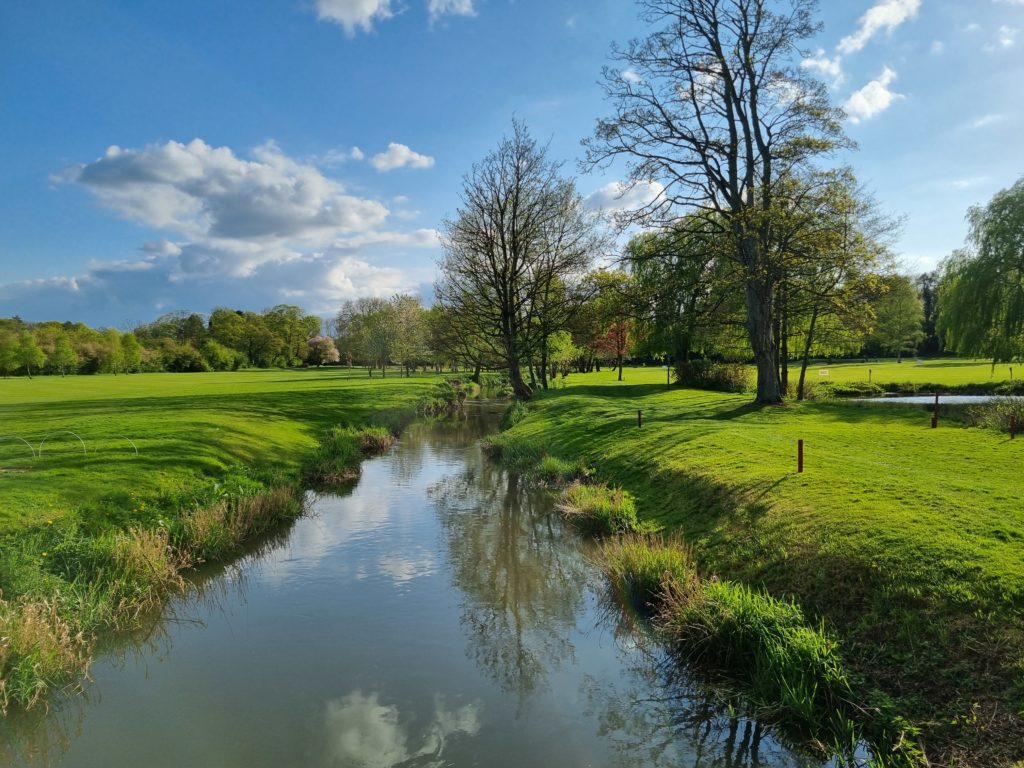
When the installation was competed in the Spring of 2017 our only source of water was abstraction from the Rothley Brook. We had an abstraction licence which allowed us to take water from the river but which could be withheld at any time by the Environment Agency in the event of low river flow due to dry weather.
Following a dry summer in 2018, it was decided to install a mains water pipe from Westfield Lane to the 18th bridge to allow us to supplement the supply from the river. At a cost of £30,000 a supply pipe was duly installed in 2019. We can now draw mains water when supply is restricted from the river but, in a dry summer, at an average annual cost of approximately £6,000. This has been an invaluable resource in the dry summers of 2020, 2022 and now 2025.
Water Storage
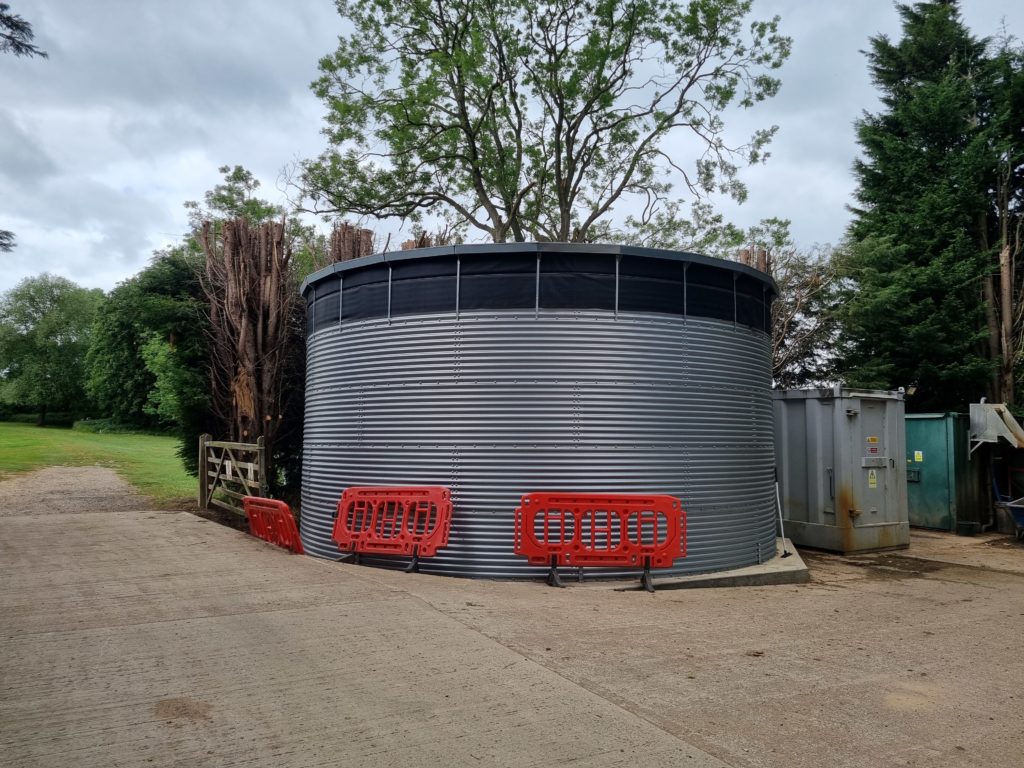
Until this year our water storage capacity was approximately 70 cubic metres which supported one full, night time watering cycle in all areas and approximately 50 cubic metres per night in normal temperate summer conditions. Earlier this year it was decided to replace our very old holding tank with a new one which more than doubled our capacity to approximately 150 cubic metres, at a cost of £35,000. The larger capacity allows us to hold enough water for three nights irrigation.
Holding Pond
A sub-committee has been formed to explore the opportunity of creating a reservoir to provide up to 10,000 cubic metres in the field between the 3rd and 14th fairways. This initiative is in its early stages, but regular updates to the membership will be provided as and when significant progress has been made.
Introduction to the R & A Golf Course 2030 Water Solutions
‘Water, like many other natural resources, is variable in its supply. Over the last 40-50 years, golf courses have become increasingly reliant on artificial irrigation to maintain and improve turf grass quality. Although often restricted to relatively small areas of a golf course, this still results in significant demand for water. The impacts of climate change, increased user expectations and historically short-term management practices have resulted in golf course water demand generally increasing, without too much planning over its source. A large number of golf courses still rely on mains water (potable) as their main supply of irrigation water. It is not only unsustainable to use potable water for turf irrigation, but also places the golf course at significant future risk, as potable water supply to the golf sector is not guaranteed’.
Read on by following this link:
https://golfcourse2030water.com/solutions/16
Follow the link below for further information on the challenges of the dry Spring: